
Boat and RV Holding Tank Pump-Out Service
Not every pump-out job involves a septic tank buried in the ground. Boats and RVs carry their own holding tanks, and getting them emptied usually means either navigating to a dump station or marina pump-out point, or having someone bring the service directly to you instead. For a lot of boat and RV owners, that second option is the far more practical one.
(574) 378-0488
Need Any Help? Call Us
We Come to You
Dock, campsite, or storage lot, no need to move your boat or RV to a dump station.
Black and Gray Water Both Handled
Full holding tank service, not just the toilet waste tank.
Fast, Clean Fittings
Proper connections mean a quick, contained pump-out without mess.
Proper, Licensed Disposal
Everything we pump goes to a licensed facility, protecting local water quality.
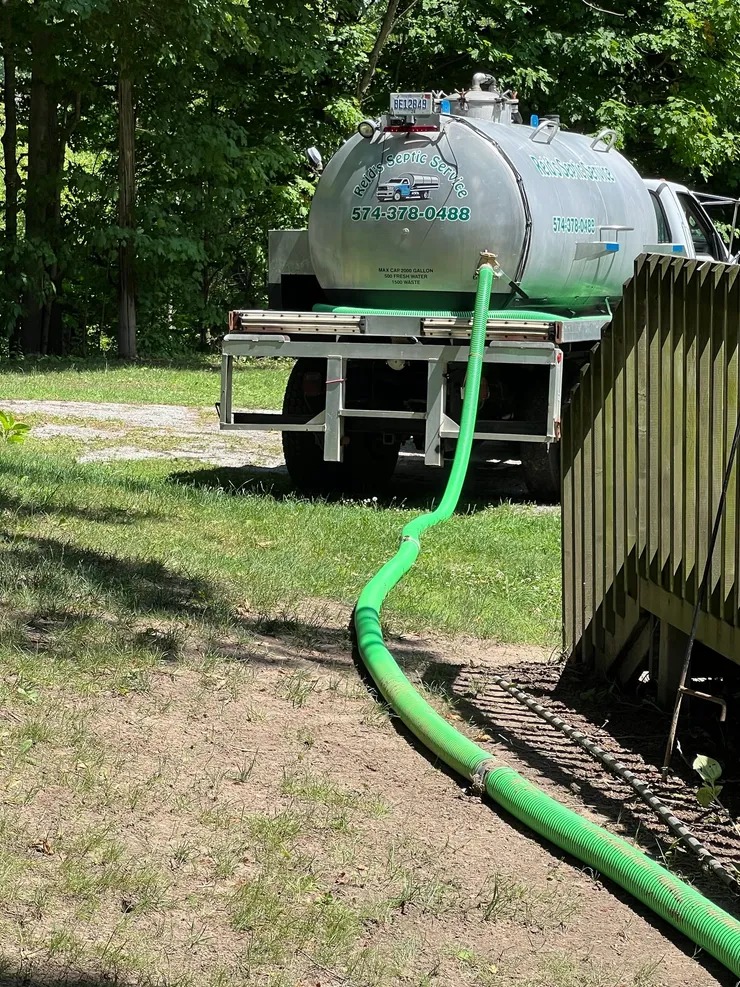
A Different Kind of Tank Entirely
A boat or RV holding tank has nothing to do with the underground septic systems most of our work involves. These are self-contained tanks built into the vehicle or vessel itself, sized for a specific volume, and meant to be emptied periodically rather than connected to any permanent drain field.
That difference means a different kind of service too. There’s no site evaluation, no drain field to worry about, and no permitting process, just a tank that needs to be emptied properly and disposed of responsibly once it’s full.
Understanding Black Water and Gray Water Tanks
Most RVs and boats with onboard bathrooms carry two separate tanks. The black water tank holds sewage from the toilet, while the gray water tank holds wastewater from sinks and showers, generally a larger volume than the black tank on a typical RV setup.
Both need to be emptied, and both matter for the same reason a residential septic tank does: neither should be discharged anywhere except a proper treatment facility. Gray water looks less concerning than black water, but it still carries contaminants that have no business ending up in a lake, river, or storm drain.
Why Mobile Pump-Out Service Makes Sense
Driving a large motorhome or towing a trailer to a dump station is a real hassle, and for boats, it usually means leaving your slip and navigating to a fixed pump-out point, assuming one is even nearby and available. Full-time RVers and boat owners who use their vessel regularly often find that inconvenience adds up fast.
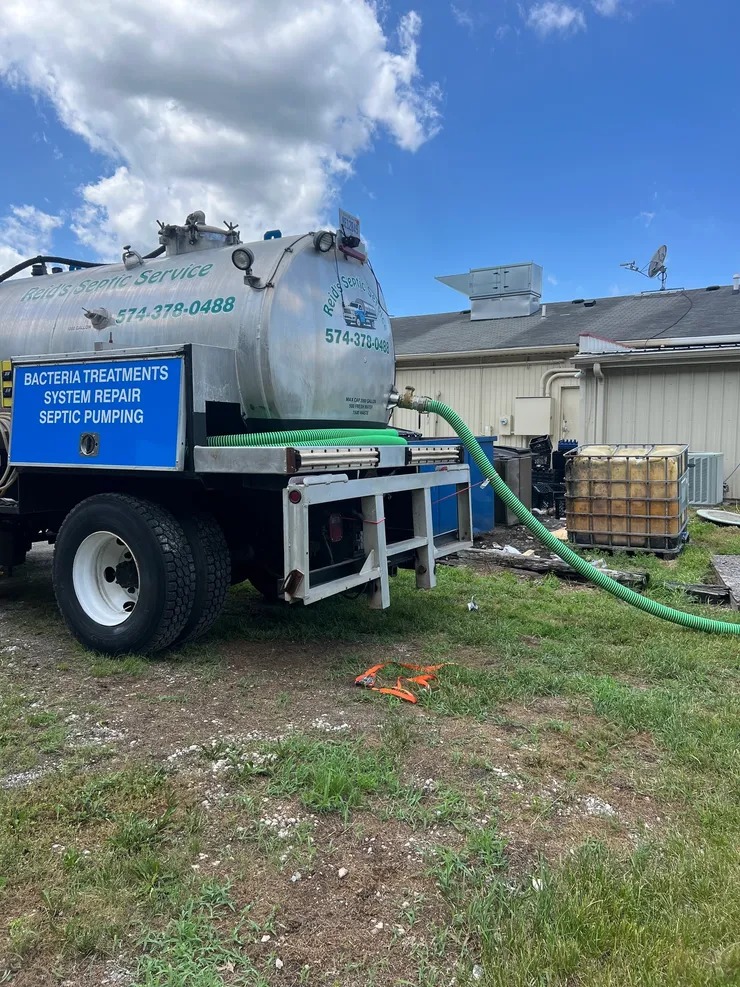
A mobile pump-out service solves that by bringing the equipment to wherever you actually are, a campsite, a private dock, a marina, or a storage lot. The tank gets emptied on-site through the same kind of vacuum equipment used for residential pumping, just adapted to the smaller fittings these tanks use.
Protecting Local Lakes and Waterways
Southwest Michigan’s lakes and shoreline draw boaters and campers throughout the season, and proper holding tank disposal is part of what keeps that water safe to swim in and drink from. Improperly discharged sewage, whether from a boat or an RV, doesn’t just violate the rules, it directly affects water quality for everyone using the same lake or river.
Every tank we pump gets disposed of through a licensed treatment facility, the same standard we hold for residential septic work. Responsible disposal isn’t an upsell here, it’s simply how the job gets done correctly.
Seasonal Timing for RV and Boat Owners
Demand for this kind of service tends to follow the season, heavier through the warmer months when boats are in the water and RVs are actively being used, and again at the start and end of the camping season when tanks need attention before storage or right after coming out of it. Scheduling ahead during peak season helps avoid a wait when everyone else is thinking about it at the same time.
A tank that sits with waste in it over winter storage isn’t doing anyone any favors either. Emptying tanks before long-term storage, whether that’s an RV heading into winter or a boat coming out of the water for the season, is worth building into your seasonal routine rather than an afterthought.
What a Pump-Out Visit Looks Like
We connect to your tank’s pump-out fitting using equipment sized for RV and marine connections, which differ from the fittings used on a residential septic tank. Both black and gray water tanks get emptied as needed, and we handle the connection and disconnection cleanly so you’re not dealing with hoses or fittings yourself.
For boats, that typically means meeting you at your slip or dock. For RVs, we can come to a campsite, a storage facility, or wherever the vehicle is currently parked, as long as there’s reasonable access for our equipment.
If the same property also has an in-ground system, it is worth pairing a visit with a septic inspection so everything gets looked at in one trip instead of two. We cover marinas, campgrounds, and storage lots around New Buffalo, and we do take emergency calls when a holding tank fills up at the worst possible moment.
Request A Free Estimate
Our Working Process
Book Service
Tell us your location, whether that's a marina, dock, campsite, or storage lot, and we'll schedule a visit.
Inspection
We confirm tank access and fittings before connecting our equipment.
Service
We pump the black and gray water tanks as needed, using equipment sized for your vehicle or vessel.
Completion
We disconnect cleanly and confirm everything is properly sealed before we leave.
Need a Boat or RV Pumped?
Let's Schedule It
Tell us where your boat or RV is located and we’ll bring the pump-out to you instead of the other way around.
(574) 378-0488
Need Any Help? Call Us
(574) 378-0488
Need Any Help? Call Us
Boat and RV Pumping Questions We Hear Often
Do you pump both the black and gray water tanks, or just one?
Both, if that’s what you need. We can service just the black tank, just the gray tank, or both together depending on what your specific vehicle or vessel requires.
Can you really come to my campsite or dock instead of me finding a dump station?
Yes, that’s the whole point of mobile service. As long as there’s reasonable access for our equipment, we can pump your tank wherever your RV or boat currently is rather than requiring you to travel anywhere.
What sets this apart from pumping a residential septic tank?
The equipment and fittings are different, sized for a self-contained holding tank rather than an in-ground septic tank, and there’s no site evaluation or drain field involved. The underlying principle is the same, though: proper removal and licensed disposal of what’s in the tank.
How often should an RV or boat holding tank actually be pumped?
It depends entirely on how often the vehicle or vessel is used and how large the tanks are. Full-time RVers and boat owners who use their vessel regularly through the season typically need service far more often than someone using a camper for occasional weekend trips.
Do you service marinas as well as private docks?
Yes, we work with both. If you keep your boat at a marina slip or at a private dock on your own property, we can typically reach either as long as there’s road access nearby for our equipment.
Is there a size limit on what RVs or boats you can service?
Most standard RV and boat holding tank setups are well within what our equipment handles. If you have an unusually large vessel or an uncommon tank configuration, mention it when you call so we can confirm we’re set up for your specific situation.
Contact Info.
- Office AddressBuchanan, MI, USAGet directions
- Call Us(574) 378-0488Tap to call
- Email Addressreidssepticservice@gmail.comSend a message
- Working HoursMon to Sun: 24 HoursOpen now