
Septic Tank Pumping and Service You Can Count On
A septic tank holds and separates wastewater before the liquid moves out to the drain field, and it needs to be pumped on a schedule or the solids inside will eventually travel where they shouldn’t. Our team at Reid’s Septic Service handles routine pump-outs, tank cleaning, and general tank service for homes and small businesses throughout the area we serve.
Most of the properties we work on fall into one of two categories: a full-time household running water fixtures every day, or a lightly used seasonal property that sees heavy bursts of activity only part of the year. Both need a pumping schedule, but the right interval looks different for each, and getting it wrong in either direction either wastes money on service you don’t need yet or risks a backup you could have avoided.
(574) 378-0488
Need Any Help? Call Us
No Guesswork Locating
We find tanks buried without risers or records, common in older homes throughout the area.
Sized to Your Property
Pumping intervals based on how your household actually uses water, not a generic timeline.
Full Tank Check Every Visit
Baffles and tank walls get inspected while we're already there pumping.
Local Sandy Soil Know-How
Years of hands-on experience with how local sandy soil handles wastewater.
Why Pumping Schedules Matter in This Region's Soil
Much of this area sits on sandy loam soil over glacial till, which drains fast compared to heavier clay. That’s good news for local agriculture, but it also means a septic tank that goes years without pumping causes problems sooner, since escaping sludge moves into the drain field trenches and clogs the soil pores much faster than it would in denser ground.
Clay-heavy soil elsewhere in the state acts almost like a filter, slowing down anything that escapes a full tank. Sandy ground doesn’t offer that same buffer. Once solids bypass the tank and reach the drain field, they travel through the soil quickly and coat the trench walls, and that coating is what eventually stops the field from absorbing liquid at all.
Recognizing the Warning Signs Before They Become a Backup
A few warning signs tend to show up before a full backup does. Drains that gurgle or empty slowly, especially after laundry or a full house of guests, often point to a tank nearing capacity. A soft, spongy patch of unusually green grass over the tank or drain field is another common sign, since escaping effluent acts like fertilizer.
Sewage odor near the tank lid, in the yard, or inside the house after heavy rain is worth a same-week call rather than waiting it out. Multiple slow drains that all act up around the same time, rather than just one fixture, usually point toward the tank itself instead of a single clogged pipe.
What Happens During a Professional Pump-Out
Many homes have tanks that were buried without risers, sometimes decades ago, with no visible lid or marker in the yard. Part of our job is locating the tank using the original permit records when they exist, probing, or working from where the sewer line exits the house.
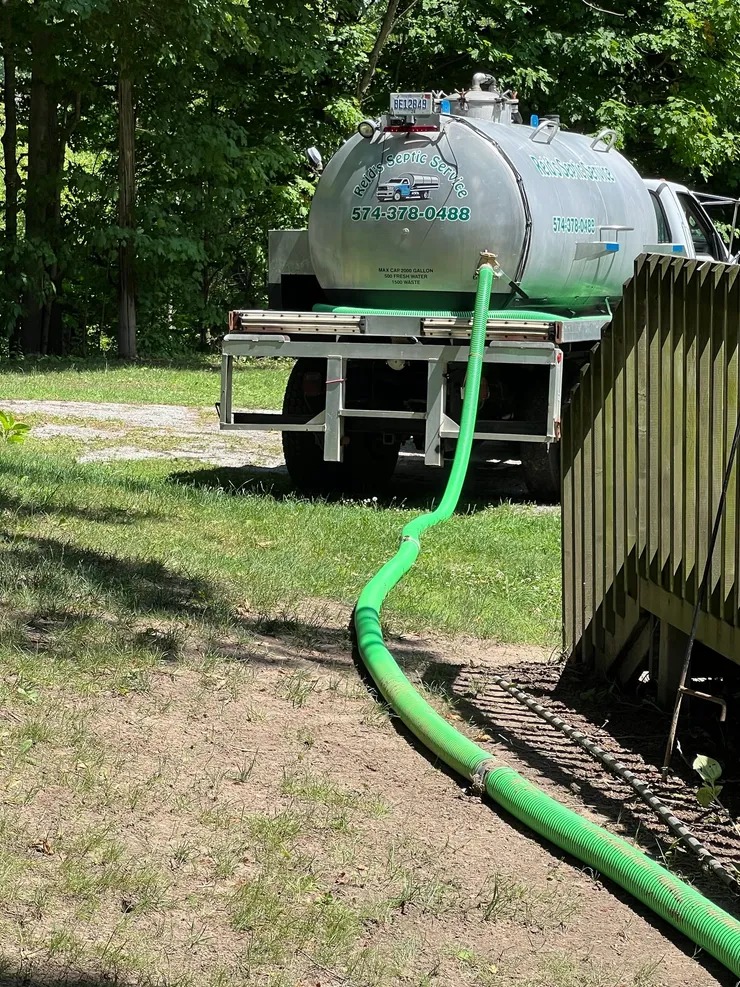
Once we’re in, we pump out the liquid layer along with the sludge on the bottom and the scum on top, since leaving either behind defeats the purpose of the visit. We also take a quick look at the baffles and the tank walls while we’re there, because a cracked baffle or structural damage is something you want to know about before it becomes an emergency. If your system has an effluent filter, we’ll check and rinse that too.
Protecting Your System Between Service Visits
What goes down your drains matters as much as how often the tank gets pumped. Avoid sending these down the drain:
- Grease, which hardens as it cools instead of breaking down
- Wipes, even ones labeled “flushable”
- Coffee grounds and cat litter, which build up as solid material far faster than normal waste
A garbage disposal adds even more solid material to the tank daily, which is one of the more common reasons heavy disposal users need shorter pumping intervals. Where you put things on the surface matters too. Parking a vehicle over the tank or drain field can compact the soil and crack buried components, and planting anything with an aggressive root system nearby gives roots an easy path toward the pipes.
Seasonal Properties Versus Year-Round Households
Properties that sit empty for stretches of the year and then see heavy weekend or holiday use follow a different load pattern than a full-time household running dishwashers and showers every day. A seasonal property can sometimes stretch its pumping interval a bit longer, but a full house of visitors over a single holiday weekend can also overload a tank faster than its size suggests, especially if the system has been sitting mostly idle beforehand.
We factor in how a property is actually used, not just its square footage or bedroom count, when we recommend a pumping interval. A three-bedroom home used by a retired couple has very different demands than the same size home used by a family of six.
Permits, Health Department Oversight, and What You Don’t Need
Michigan doesn’t have a single statewide septic code, which means oversight for new installations and major repairs runs through the local health department instead. Requirements can vary somewhat depending on which county your property falls under, since each one administers its own permitting process.
The good news for routine pumping is that a permit is generally required for installing or repairing a system, not for a standard pump-out visit. If a pump-out uncovers a problem that needs actual repair work, that’s the point where permitting enters the picture, and we’ll walk you through exactly what that involves.
Request A Free Estimate
Our Working Process
Book Service
Call or fill out the estimate form, and we'll schedule your pump-out at a time that works with your property and your household's routine.
Inspection
We locate the tank, check the baffle condition, and measure how full it is before pumping begins, so we know exactly what we're working with.
Service
We pump the tank completely, removing sludge, scum, and liquid with professional equipment, and rinse the effluent filter if your system has one.
Completion
We confirm the tank is properly sealed, clean up the work area, and let you know your next recommended service date before we leave.
Get in Touch With Our
Septic Tank Team
Overdue for a pump-out, or not sure when your tank was last serviced? Reid’s Septic can usually get a technician out within days, not weeks. Call the number below or fill out the estimate form, and we’ll follow up with a straightforward answer, not a sales pitch.
(574) 378-0488
Need Any Help? Call Us
(574) 378-0488
Need Any Help? Call Us
Answers to Common Septic Tank Pumping Questions
Common questions about septic tank pumping, scheduling, and what a pump-out visit actually involves. If your question isn’t answered here, call us at (574) 378-0488 and we’ll give you a straight answer.
How often should a septic tank be pumped in this area?
Most residential tanks need pumping every three to five years, though household size, water use, and garbage disposal habits all shift that number. Homes with a high water table nearby or heavier daily use often land closer to the three-year mark.
Can I find my septic tank myself before you arrive?
Sometimes. If you have a copy of the original permit or as-built drawing from the county health department, it usually shows tank placement relative to the house. Many buried tanks in older properties have no visible marker at all, which is where our locating process comes in.
What's the difference between pumping and cleaning a septic tank?
Pumping removes the liquid and most of the solids from the tank. Cleaning goes a step further and breaks up and removes material stuck to the tank walls and baffles.
Do I need a permit just to have my tank pumped?
No. Routine pumping and tank maintenance don’t require a health department permit, only new septic installations and repairs or replacements do.
What happens if I keep putting off a pump-out?
Solids that aren’t removed eventually flow out of the tank and into the drain field lines, where they clog the soil that’s supposed to absorb liquid, and that clogging can happen faster than expected in sandy ground.
Is it normal for a newly pumped tank to fill back up quickly?
Some liquid returns almost immediately, since the tank refills as your household uses water, and that’s expected. A tank that seems full again within days usually points to a struggling drain field rather than a pumping problem.
Contact Info.
- Office AddressBuchanan, MI, USAGet directions
- Call Us(574) 378-0488Tap to call
- Email Addressreidssepticservice@gmail.comSend a message
- Working HoursMon to Sun: 24 HoursOpen now