
New Septic Tanks: Materials, Sizing, and Installation
Sometimes the drain field is still working fine and only the tank itself has reached the end of its life, cracked, corroded, or simply too small for how the property is used now. A new tank doesn’t always mean a whole new system, and knowing the difference matters for both the scope of the work and what it costs. We evaluate that distinction honestly before recommending either path.
(574) 378-0488
Need Any Help? Call Us
Tank-Only Replacement Available
When the drain field is sound, we can swap just the tank without touching the rest of the system.
Material Options for Your Site
Concrete, plastic, or fiberglass, chosen based on access, soil, and water table.
Sized to Actual Use
We size the new tank around your household, not a one-size assumption.
Old Tank Properly Decommissioned
The old tank gets removed or safely abandoned, never just left as a hazard underground.
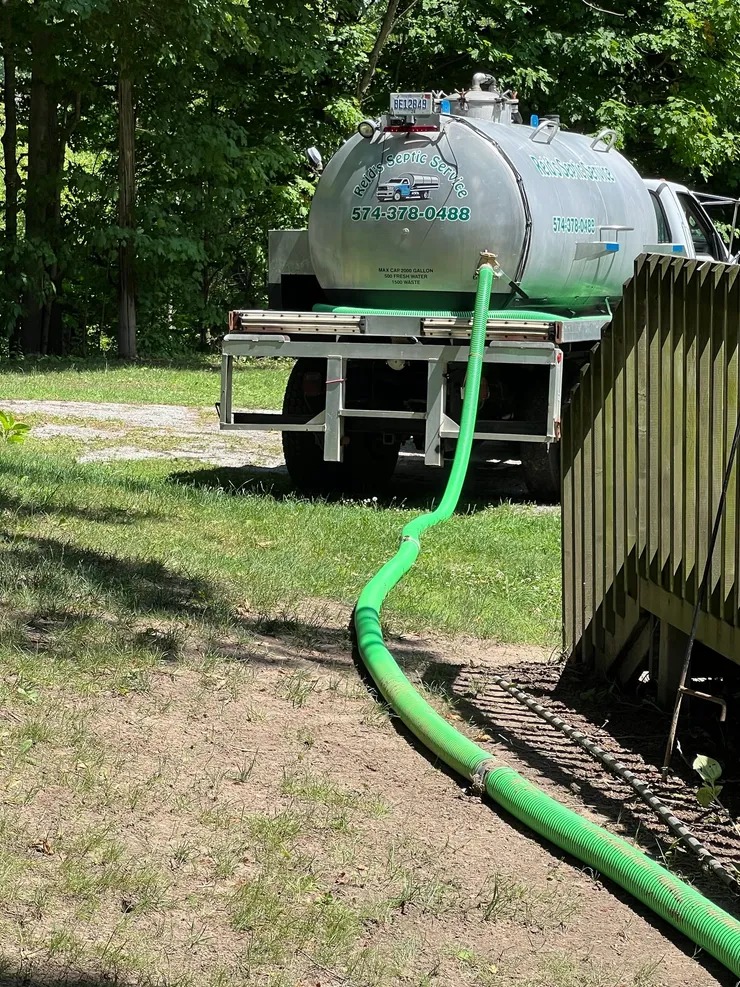
When Just the Tank Needs Replacing
A septic system has two main components that age differently: the tank and the drain field. A tank can crack, corrode, or structurally fail well before the drain field it’s attached to has any problems at all, especially with an older concrete tank that’s been in the ground for decades.
When that’s the situation, replacing only the tank and connecting it to the existing, still-functional drain field is a smaller project than a full system replacement, both in scope and disruption to the property. We confirm the drain field is genuinely sound before recommending this route, since connecting a new tank to a field that’s already failing just delays a bigger problem rather than solving anything.
Choosing a Tank Material for Your Site
Concrete has been the standard for decades, and for good reason: it’s heavy enough to resist floating even where the water table sits high, and it holds up well to decades of use with proper pumping. The tradeoff is weight, a concrete tank requires heavy equipment to deliver and set, which matters on sites with limited access.
Plastic tanks, usually polyethylene, weigh a fraction of what concrete does and go in more easily on tight or hard-to-reach sites. They resist corrosion completely, though they need to be properly secured and ballasted in high water table conditions to avoid the tank shifting or floating over time. Fiberglass sits between the two, lighter than concrete and more resistant to cracking, at a higher cost than plastic. Which material makes sense depends on your site’s access, soil, and water table more than personal preference.
How Tank Size Actually Gets Determined
A 1,000-gallon tank is a common benchmark for smaller homes, but actual sizing depends on expected daily water use, which correlates with household size and habits more than square footage. A larger household, more bathrooms in regular use, or a garbage disposal running daily all push toward a larger tank than a smaller, lighter-use property would need.
Undersizing a tank relative to actual use is one of the more common reasons a property ends up needing more frequent pumping than expected. Getting the size right at installation avoids that ongoing inconvenience rather than fixing it with a more aggressive pumping schedule later.
Single Chamber Versus Two-Compartment Design
Older single-chamber tanks handle everything, settling, separation, and storage, in one open space. Most tanks installed today use a two-compartment design instead, where wastewater enters the first chamber and settles before moving into a second chamber for further settling before it reaches the outlet.
That extra separation stage generally does a better job keeping solids contained before liquid ever reaches the drain field. Single-compartment tanks also typically don’t support an effluent filter the way a modern two-compartment design does, which is one more reason two-compartment tanks have become the standard for new installations.
Signs Point Toward Replacement Rather Than Repair
A tank showing hairline cracks, visible corrosion above the waterline, or a lid and access points that have deteriorated beyond a simple patch are all signs that repair is no longer the practical option. Concrete tanks in particular are vulnerable to a specific kind of corrosion caused by gases produced inside the tank, which attacks the concrete from the inside above the liquid line rather than anywhere visible from outside.
A tank that seems to need pumping far more often than it should, even after ruling out a baffle problem, can also point to structural issues letting groundwater in or wastewater out through cracks that aren’t otherwise visible. When a straightforward repair genuinely isn’t realistic, replacing the tank outright is usually the more honest recommendation than a series of temporary patches.
Getting the Old Tank Out Safely
An old tank doesn’t just disappear once a new one is in place. Depending on its condition and the property’s plans, it either gets excavated and removed entirely or properly decommissioned in place, typically by breaking or removing the top and filling the tank with sand, gravel, or another approved material so it can’t later collapse.
Leaving an old tank buried and forgotten without decommissioning it correctly is a real safety hazard, since a collapsed void underground can become a sinkhole years later. We handle that step as part of the project rather than treating it as optional cleanup.
Permits for a Tank Replacement
Whether a tank swap needs the same level of permitting as a full new system depends on the county and the specifics of the project, but replacement work generally still requires some form of health department notification or approval in Michigan, since counties regulate septic work locally rather than under a single statewide code. We confirm exactly what your specific project requires before work begins rather than assuming either way.
Request A Free Estimate
Our Working Process
Book Service
Tell us what's going on with your current tank, and we'll schedule a visit to evaluate it.
Inspection
We assess the tank's condition and confirm whether the drain field can be reused as-is.
Service
We install the new tank in the material and size that fits your site, and properly handle the old one.
Completion
We confirm all connections are sound and the system is fully operational before we finish up.
Considering a New Tank?
Get in Touch
Whether it’s time for a full replacement or just the tank itself has reached the end of its life, describe what’s going on and we’ll tell you honestly what your property actually needs.
(574) 378-0488
Need Any Help? Call Us
(574) 378-0488
Need Any Help? Call Us
New Tank Questions We Hear Often
Can I replace just the tank without redoing the entire drain field?
Often, yes, as long as the drain field is confirmed to still be absorbing water properly. We evaluate the field’s condition before recommending a tank-only replacement, since connecting a new tank to a failing field wouldn’t actually solve the underlying problem.
Which tank material do you recommend, concrete or plastic?
It depends more on your site than a universal answer. Concrete offers stability in high water table conditions and long-term durability, while plastic is lighter, corrosion-resistant, and easier to install on tight-access sites. The right fit for your specific property comes down to those site conditions, not a default preference.
What determines the size tank I actually need?
Sizing is based on expected daily water use, which correlates with household size, number of bathrooms, and habits like daily garbage disposal use more than square footage alone. A 1,000-gallon tank is common for smaller households, but we size around your actual situation rather than assuming.
Is a two-compartment tank actually better than a single chamber?
For most residential situations, yes. The extra separation stage in a two-compartment design does a better job keeping solids contained before liquid reaches the drain field, and it supports an effluent filter, which most single-chamber tanks don’t.
What happens to my old tank once the new one is installed?
Depending on condition and the property’s plans, it’s either excavated and removed or properly decommissioned in place by breaking the top and filling the void with an approved material. Leaving it buried and unaddressed creates a real collapse hazard later, so this step isn’t optional.
Does a straightforward tank swap require the same permit as a brand-new system?
Not always the same process, but it typically still requires some level of county health department notification or approval, since Michigan regulates septic work at the county level rather than statewide. We confirm exactly what your project requires before starting rather than assuming it’s exempt.
How long should a new tank actually last before I have to think about this again?
It depends heavily on material and maintenance rather than a single fixed number. A well-maintained tank, pumped on a regular schedule, can last decades regardless of material, while one that’s consistently neglected will show problems far sooner no matter what it’s made of. Staying current on pumping does more for a tank’s lifespan than the material choice alone.
Contact Info.
- Office AddressBuchanan, MI, USAGet directions
- Call Us(574) 378-0488Tap to call
- Email Addressreidssepticservice@gmail.comSend a message
- Working HoursMon to Sun: 24 HoursOpen now