
Sewer Line Repair for Homes and Properties
The sewer line is the pipe that carries wastewater from your house to the septic tank, and when it cracks, sags, or gets blocked by roots, the tank itself can be in perfect shape while you still deal with backups. Reid’s Septic finds the actual problem with camera inspection before any digging starts, so repairs are based on what’s really happening underground rather than guesswork.
Sewer line problems get confused with septic tank problems more often than you’d expect, since both can produce the same symptom: a slow or backed-up drain. The two issues call for completely different fixes, so an accurate diagnosis before any work starts saves you from paying for the wrong repair.
(574) 378-0488
Need Any Help? Call Us
Camera-Verified Diagnosis
We see the actual damage inside the line before recommending any repair.
Minimal Yard Disruption
Targeted excavation over the damaged section instead of digging up the whole line.
Built for Freeze-Thaw Ground
Repairs account for Michigan's required burial depth below the frost line.
Root Intrusion Experience
Familiar with the mature-tree lots common on older residential streets.
Causes of Sewer Line Failure in This Region
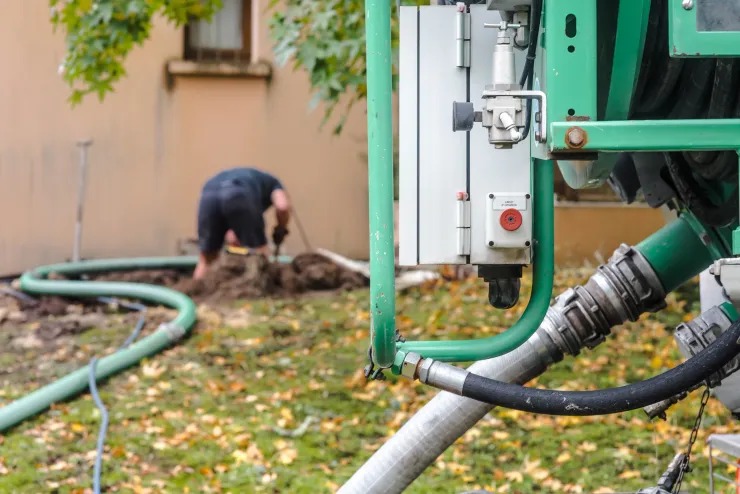
Tree roots are a frequent culprit on older properties with mature trees, working into small cracks in aging clay or cast-iron pipe until they choke the line. Ground movement is another factor: freeze-thaw cycles cause soil to expand and contract through the winter months, and a pipe that shifts even slightly with that movement can develop a crack or a low spot where waste collects instead of flowing through. Add decades of ordinary settling, and it’s not unusual to find a section of pipe that’s sagged just enough to trap solids.
Warning Signs a Sewer Line Needs Attention
Multiple drains slowing down at the same time, particularly starting with the lowest fixtures in the house like a basement floor drain, is one of the clearest signs the problem sits in the shared sewer line rather than a single clogged pipe. A gurgling sound from one drain when you run water in a completely different fixture is another giveaway, since it suggests air is trapped somewhere along a partially blocked line.
Outside, a soggy or unusually green strip of lawn tracing the path between the house and the septic tank can mean the line is leaking before it ever reaches the tank. A sewage smell in that same area, especially one that comes and goes, is worth investigating before it becomes constant.
How Freeze-Thaw Cycles Affect Buried Sewer Lines
Michigan’s frost line runs roughly 42 inches deep in a typical winter, and state code requires a building sewer to be buried at least that deep specifically to keep it below the freeze zone. A line that was installed too shallow, or one where the surrounding soil has eroded or settled over the years, becomes vulnerable when a hard winter pushes frost deeper than usual.
When a sewer line does freeze, drains back up throughout the house all at once rather than slowing down gradually, which is often how homeowners first realize there’s a depth or insulation problem rather than a simple clog.
Camera Inspection Before Any Digging
We run a camera through the line before recommending a repair method, because a sewer problem can look identical from the symptoms alone whether it’s a root intrusion, a belly in the pipe, or a full collapse. Seeing the actual condition of the pipe lets us tell you whether a section needs to be replaced, whether the whole run needs attention, or whether a targeted repair will hold.
Repair Options: Targeted Fixes, Trenchless Methods, and Full Replacement
Once we know exactly where the damage is, the repair itself usually falls into one of a few categories:
- Targeted repair — a short, localized problem, like a single cracked joint or a small root intrusion, often only needs the specific section opened up and replaced rather than the entire line
- Trenchless repair — for longer runs of aging or repeatedly failing pipe, this can sometimes address the problem with far less excavation than a traditional dig, depending on the pipe’s material, depth, and condition
- Full replacement — a line that’s collapsed, badly deteriorated across its full length, or installed at the wrong grade from the start is usually better served by full replacement, since a series of patch repairs tends to cost more in total than doing it right once
When a Sewer Repair Turns Into an Emergency
Not every sewer issue needs same-day attention, but a full blockage backing sewage into tubs, showers, or floor drains does. Active backups like that get routed to our emergency line instead of scheduled repair work, so they don’t wait behind other jobs on the calendar.
Request A Free Estimate
Our Working Process
Book Service
Tell us what you're noticing, slow drains or a repeat backup, and we'll schedule a diagnostic visit at a time that works for you.
Inspection
A camera pinpoints the exact location, cause, and extent of the problem before we recommend any next steps or repair approach.
Service
We complete the targeted repair, trenchless fix, or replacement based on exactly what the camera inspection showed, not a guess.
Completion
We test the line to confirm proper flow and restore your yard as close to its original condition as the repair allows.
Talk to Our
Sewer Repair Team
Slow drains throughout the house, or a backup that keeps coming back, usually points to the sewer line rather than the tank. Reach out and describe what you’re seeing, and we’ll get a camera inspection scheduled to find the actual cause instead of guessing at a fix.
(574) 378-0488
Need Any Help? Call Us
(574) 378-0488
Need Any Help? Call Us
Sewer Line Repair Questions We Hear Often
How do I know if it's the sewer line or the septic tank causing my backup?
If every drain in the house is slow or backing up at the same time, especially the lowest fixtures first, the sewer line between the house and tank is the more likely cause. A camera inspection tells us for certain rather than guessing.
Will you need to dig up my whole yard to fix a sewer line?
Not always. Once we know exactly where the damage is from the camera inspection, many repairs only require opening the specific section that’s failed rather than the entire run.
Are tree roots really a serious problem for sewer lines in this area?
Yes, particularly on older lots with large, established trees. Roots don’t cause the initial crack, but they exploit any existing gap in the aging pipe and expand it over time.
How deep should my sewer line be buried to avoid freezing?
Michigan’s residential plumbing code requires a building sewer to sit at least 42 inches below grade, which is meant to keep it below the typical frost line.
Can a sewer line be repaired in winter?
It can, though frozen ground adds time and difficulty to any excavation. A winter backup still gets assessed the same day, and we’ll tell you plainly whether the fix can wait for a thaw.
How is trenchless repair different from a targeted repair?
A targeted repair opens up the ground over a specific damaged section and replaces just that part of the pipe. Trenchless repair works from access points at each end of a run and rehabilitates the pipe with minimal digging in between.
Contact Info.
- Office AddressBuchanan, MI, USAGet directions
- Call Us(574) 378-0488Tap to call
- Email Addressreidssepticservice@gmail.comSend a message
- Working HoursMon to Sun: 24 HoursOpen now