
Septic Filter Cleaning and Maintenance
An effluent filter is a small, inexpensive component that does an outsized job protecting your drain field, but it only works if someone actually cleans it. Left alone long enough, a clogged filter causes its own set of problems, ones that look different from what happens when a filter isn’t there at all. Understanding that difference is worth a few minutes before deciding how seriously to take a routine cleaning schedule.
(574) 378-0488
Need Any Help? Call Us
More Frequent Than Pumping
Filters typically need attention well before your next scheduled pump-out.
Sized to Household Use
We base your cleaning schedule on actual water use, not a flat interval.
Quick, Focused Visits
A filter cleaning is a short, contained job, not a full system service.
Paired With Pump-Outs When It Makes Sense
We can combine filter cleaning with a scheduled pumping visit to save you a trip.
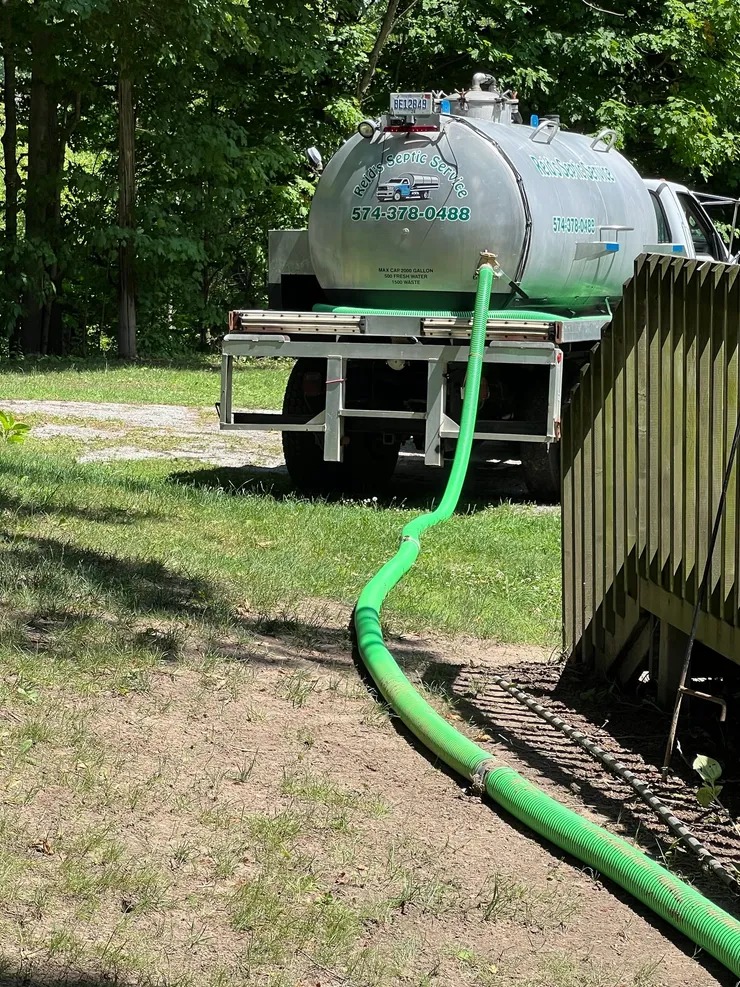
What an Effluent Filter Actually Does
An effluent filter is a slotted plastic screen installed at the tank’s outlet, positioned to catch solids while letting liquid pass through toward the drain field. It sits downstream of the outlet baffle as an extra layer of protection, catching finer material the baffle alone wouldn’t stop.
That extra screening matters more than it might seem. Without a filter, the drain field is the only thing standing between escaping solids and a clogged field, and soil out there isn’t designed to filter anything, only to absorb liquid. A filter gives you a second chance to catch what the tank didn’t fully settle out before it becomes the drain field’s problem.
How Often a Filter Actually Needs Cleaning
Most filters need cleaning somewhere between every six months and every year, though the real answer depends heavily on household size and water use. A smaller household with light daily use might reasonably stretch closer to a year between cleanings, while a larger family running a garbage disposal regularly may need attention every few months instead.
At an absolute minimum, a filter should be cleaned every time the tank is pumped, but waiting that long between cleanings, three to five years, risks a fully clogged filter well before that scheduled visit ever arrives. If you’ve never had your filter checked and don’t know how your household compares, starting with a check every six months and adjusting from there is a reasonable way to find your actual interval.
The Difference Between a Clogged Filter and a Missing Baffle
These two problems produce almost opposite symptoms, which is worth understanding. A missing or broken baffle lets solids travel past the tank uncontrolled, and the drain field absorbs the damage while the house itself keeps draining normally, at least for a while.
A clogged filter does the reverse. It’s doing exactly what it’s supposed to, blocking solids, but once it’s fully blocked, it also blocks the liquid trying to pass through it. That backs water up inside the tank and eventually into the house itself, which is inconvenient and unpleasant, but it’s actually the filter successfully protecting the drain field from what would otherwise be getting through.
What Speeds Up Clogging Between Visits
Running several loads of laundry back to back, filling a large tub, or otherwise sending a lot of water through the system in a short window creates turbulence inside the tank. That turbulence keeps solids suspended in the water instead of settling to the bottom the way they normally would, and those suspended solids head straight for the filter instead.
A garbage disposal used heavily adds a steady stream of fine solid material that a filter has to work harder to catch, and anything genuinely non-biodegradable, wipes labeled flushable included, accelerates clogging further. None of these need to be eliminated entirely, but knowing which habits load up a filter faster helps explain why two households with identical tanks can need very different cleaning schedules.
A tank that’s overdue for its own pumping compounds the problem too, since a tank already close to full gives solids less room and less time to settle before liquid moves toward the filter. Staying current on both pumping and filter cleaning works together rather than as two unrelated tasks.
What a Filter Cleaning Appointment Involves
We access the filter through the tank’s outlet, remove it, and thoroughly rinse off the accumulated solids before reinserting it correctly. If the tank is already scheduled for pumping, we handle both in the same visit, since the tank is already open and accessible.
If you’ve noticed early signs, slower drains than usual, a gurgling sound, or a high-water alarm if your system has one, we’ll also check whether anything beyond routine buildup is contributing to the problem before simply cleaning the filter and calling it done.
Can You Clean Your Own Filter Between Visits?
Some effluent filters are designed to be accessible without fully opening the tank, and a homeowner comfortable doing so can sometimes rinse one off between professional visits. That said, locating the filter correctly, handling it safely, and reinstalling it properly all matter, and getting any of that wrong can cause more disruption than the clog it was meant to solve.
We’re glad to show you what your specific system’s filter looks like and where it’s located during a visit if you’re interested in handling basic maintenance yourself between professional cleanings.
Request A Free Estimate
Our Working Process
Book Service
Tell us if you're overdue for a filter check or noticing early signs, and we'll schedule a visit.
Inspection
We locate and access the filter and assess how much buildup has accumulated.
Service
We remove, thoroughly clean, and correctly reinstall the filter, pairing it with a pump-out if one's due.
Completion
We confirm drainage is flowing normally before we consider the visit finished.
Overdue for a Filter Check?
Reach Out
Slower drains, a gurgling sound, or simply not knowing the last time your filter was cleaned are all good reasons to get it looked at before it becomes a bigger inconvenience.
(574) 378-0488
Need Any Help? Call Us
(574) 378-0488
Need Any Help? Call Us
Filter Cleaning Questions We Hear Often
How often does my specific household actually need filter cleaning?
It depends on household size and water use more than any single fixed number. A smaller household with light use might go close to a year between cleanings, while a larger family with a garbage disposal in regular use may need it every few months. Starting with a six-month check and adjusting from there helps establish your actual interval.
What happens if I never clean the effluent filter?
Eventually it clogs completely, and because it’s doing its job correctly right up until that point, a fully blocked filter stops liquid from passing through at all. That causes backups inside the house rather than damage to the drain field, since the filter is still protecting the field even as it stops working for you.
Can I clean the filter myself instead of calling a professional?
Some filters are accessible enough for a comfortable homeowner to rinse off between visits, but locating, handling, and reinstalling it correctly all matter. We’re happy to show you your specific system’s filter and talk through what’s involved if you’re interested in doing basic maintenance yourself.
Does every septic tank actually have an effluent filter?
Not necessarily, particularly older or single-compartment tanks that predate when filters became standard practice. If your tank doesn’t currently have one, adding an effluent filter is usually a straightforward upgrade worth considering, since it adds meaningful protection for a relatively small cost.
Is a clogged filter something that needs immediate attention?
If it’s already causing a backup inside the house, yes, that warrants a prompt call. If you’re just noticing early signs like slower drains, it’s worth scheduling soon, but it’s generally not the kind of emergency that requires an after-hours call the way an active sewage backup does.
Does filter cleaning happen automatically whenever the tank gets pumped?
It should, since the tank is already open and accessible during a pump-out, and we include it as standard practice on our own visits. It’s worth confirming with any septic company you work with, though, since not everyone treats it as automatic.
My system has a high-water alarm. Could a clogged filter be setting it off?
Yes, particularly in systems with a pump chamber, where a blocked filter can cause the liquid level to rise and trigger the alarm before an actual overflow happens. Treat an alarm as a genuine signal worth checking rather than something to silence and ignore, since it’s often the earliest warning a filter is giving you.
Contact Info.
- Office AddressBuchanan, MI, USAGet directions
- Call Us(574) 378-0488Tap to call
- Email Addressreidssepticservice@gmail.comSend a message
- Working HoursMon to Sun: 24 HoursOpen now