
Septic Line and Distribution Box Repair
The pipe between your septic tank and the drain field doesn’t get much attention until something goes wrong with it, and it’s a different piece of the system than the sewer line running from your house to the tank. A settled section, a crushed pipe, or an unlevel distribution box out here causes its own distinct set of problems, ones that can look like a failing drain field if you’re not looking in the right place.
(574) 378-0488
Need Any Help? Call Us
Not the Same as a Sewer Line
We diagnose the specific segment between your tank and drain field, a different repair than a house sewer line.
Distribution Box Expertise
An unlevel or damaged D-box overloads part of your field without you ever seeing it happen.
Targeted Excavation
We open up the specific section that's failed, not the whole run between tank and field.
Protects the Rest of Your Field
Catching a line problem early can prevent uneven wear that shortens your drain field's life.
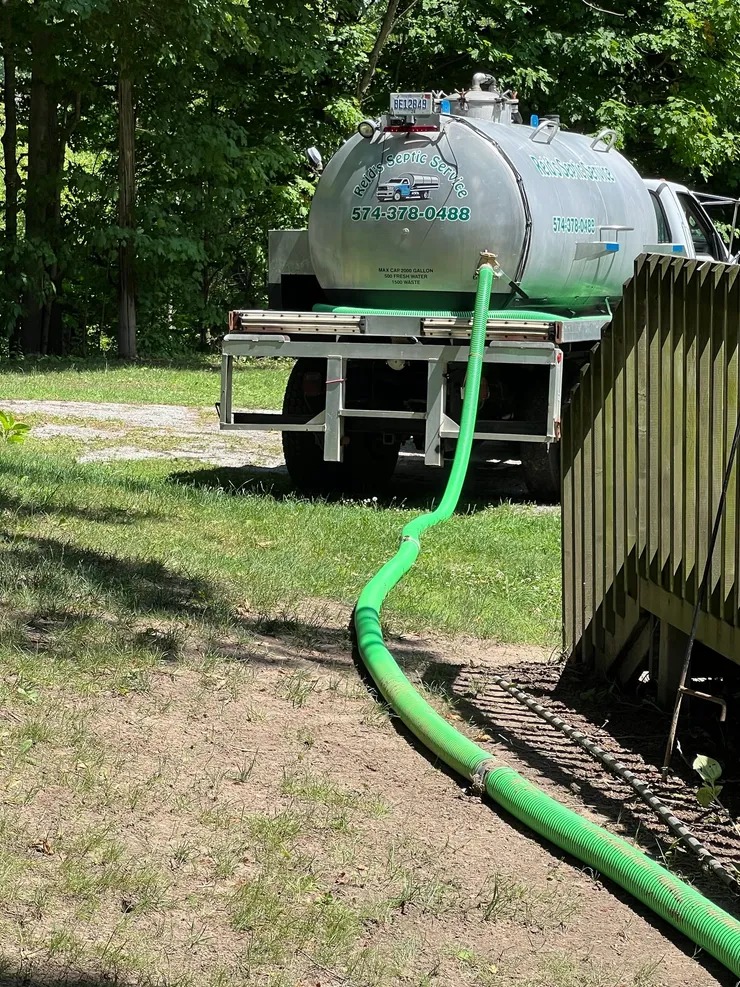
The Line Most People Don't Think About
Most homeowners are familiar with the idea of a sewer line, the pipe carrying wastewater from the house to the septic tank. Fewer think about what happens next: a separate line carries already-settled effluent from the tank’s outlet to a distribution box, which then splits that flow across the lateral lines running through the drain field itself.
This line and the distribution box it feeds are a genuinely different part of the system than either the house sewer or the drain field’s own laterals. It carries liquid that’s already been through the tank, not raw wastewater, and it typically runs a much shorter distance, but a problem here can still cause real issues both upstream at the tank and downstream in the field.
Common Causes of Line Failure Between Tank and Field
Ground settling over time is one of the more common culprits, especially on a line installed decades ago where the surrounding soil has shifted and left a low spot that traps liquid instead of letting it flow through. A section of pipe sitting in a sag like that can back up rather than draining the way it’s supposed to.
Physical damage is another frequent cause. Driving or parking heavy equipment over this section, even occasionally, can crush or crack a pipe that was never designed to handle that kind of load from above. Tree roots can also intrude here, though less often than on a longer sewer line run, since this segment is typically shorter and buried more consistently.
Improper slope from the original installation is a less obvious but real cause too. A line that was laid too flat, or with a slight uphill grade in one section, doesn’t drain fully between uses even without any physical damage, and that standing liquid can eventually contribute to backups or odor issues that seem to come from nowhere.
Why the Distribution Box Matters So Much
A distribution box takes the flow arriving from the tank and splits it evenly across however many lateral lines make up the drain field. When it’s level and functioning correctly, every lateral gets a fair share of the load, which is exactly how a drain field is designed to work over its full footprint.
When a distribution box settles unevenly or a connection inside it gets damaged, one or two laterals can end up absorbing far more than their share while others barely get used at all. That imbalance quietly wears out part of the field years before the rest of it would naturally reach the end of its life, which is part of why a distribution box problem deserves attention even when it isn’t causing an obvious symptom yet.
Signs This Specific Line Is the Problem
A wet or unusually green strip of ground tracing the direct path between the tank and the drain field, rather than a wider area across the whole field, often points specifically to this line or the distribution box rather than the field itself. That localized pattern is one of the clearer signs worth mentioning when you call.
Sewage odor concentrated along that same path, or a tank that seems to be draining more slowly than it should even though the field elsewhere looks fine, are both worth checking as well. These symptoms can look similar to a failing drain field at first glance, which is exactly why an accurate diagnosis matters before assuming the whole field needs work.
How We Diagnose and Repair This Line
We start by probing and, where useful, running a camera through the accessible sections to confirm exactly where the problem sits rather than guessing based on symptoms alone. A distribution box gets opened and checked directly, since a leveling issue or internal damage isn’t always obvious from the surface.
Once we know what’s actually wrong, repair usually means targeted excavation over the specific problem area, whether that’s releveling or replacing a distribution box or repairing a settled or damaged section of pipe. This is typically a smaller, more contained project than a full drain field repair, and catching the problem here is often what prevents it from becoming one.
Request A Free Estimate
Our Working Process
Book Service
Describe what you're noticing between the tank and drain field area, and we'll schedule a visit.
Inspection
We probe the line and check the distribution box to pinpoint exactly where the problem is.
Service
We complete targeted excavation and repair or replace the specific section or component involved.
Completion
We confirm flow is even and reaching the drain field properly before considering the job done.
Noticing a Wet Spot Between
Tank and Field?
If you’re seeing standing water, odor, or unusually lush grass tracing a specific path in your yard rather than spread across a wider area, tell us what you’re noticing and we’ll find out exactly what’s going on.
(574) 378-0488
Need Any Help? Call Us
(574) 378-0488
Need Any Help? Call Us
Septic Line QuestionsWe Hear Often
How is this different from a sewer line repair?
Sewer line repair addresses the pipe carrying raw wastewater from your house to the septic tank. This service covers the separate line and distribution box that carry already-settled effluent from the tank out to the drain field, a different segment with different failure causes.
What exactly is a distribution box and why does it matter?
It’s the component that splits flow arriving from the tank evenly across the lateral lines running through your drain field. When it’s level and working correctly, every lateral gets a fair share of the load. When it isn’t, part of the field can wear out years before the rest of it would.
What typically causes this line to fail?
Ground settling over time, creating a low spot where liquid pools instead of flowing through, is common, especially on older installations. Physical damage from heavy equipment or vehicles driving over the area is another frequent cause, and tree roots can occasionally be a factor as well.
How do you find the exact problem without digging up the whole yard?
We probe the line and use a camera where accessible to pinpoint the specific location before any excavation starts. That lets us open up just the section that actually needs attention rather than the entire run between the tank and the field.
Can parking or driving over this part of my yard actually damage the line?
Yes, even occasional heavy loads from a vehicle or equipment can crush or crack a pipe that wasn’t designed to bear weight from above. It’s worth knowing roughly where this line runs and avoiding driving or parking directly over it when possible.
Is repairing this line less invasive than repairing the drain field itself?
Generally, yes. This is a more contained repair focused on a specific pipe segment or the distribution box, while drain field work involves the much larger area where the lateral lines actually spread through the soil. Catching a line or distribution box problem early is often what keeps it from turning into the larger project.
Does repairing this line require a permit?
Straightforward component repairs, like releveling a distribution box or fixing a settled section of pipe, are typically simpler from a permitting standpoint than a new installation, though this can vary by county. We’ll let you know if anything about your specific repair requires notifying the local health department before work begins.
Contact Info.
- Office AddressBuchanan, MI, USAGet directions
- Call Us(574) 378-0488Tap to call
- Email Addressreidssepticservice@gmail.comSend a message
- Working HoursMon to Sun: 24 HoursOpen now